 My daughters tell me that I’m one of the last of the dinosaurs who actually listen to the radio, but that’s another story.
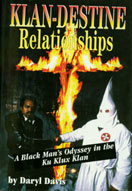
I heard an intriguing interview on the way home from work yesterday: the interview was on the CBC’s DNTO (definitely not the opera) program, and Daryl Davis, author of Klan-Destine Relationships, A Black Man’s Odyssey in the Ku Klux Klan, was the guest.
After Daryl had suffered through his first racial incident, his parents sat him down and explained that some people didn’t like him, and believed him to be inferior, because his skin was dark. He didn’t believe them at first; but, as his experience grew, it slowly dawned on him that his parents were right. He didn’t understand: he couldn’t comprehend why a stranger would dislike and even hate him because of his skin color. He felt sorry for these people; he likened their twisted beliefs to a disease (and the disease traveled both ways: whites against blacks, and vice-versa). So he started studying books on the Ku Klux Klan. He read books filled with interviews, but the interviews were all done by white journalists, and didn’t provide the answers he was searching for.
He decided to write his own book and do his own research: he interviewed Ku Klux Klan members, without telling them in advance that he wasn’t white. He even attended KKK rallies; cross-burnings.
While he was attempting to understand racial prejudice and gather information for his book, an astounding phenomena occurred: many of the Klan members became familiar with Daryl, changed their views, and rescinded their beliefs.
People can change.
I’m not aware of all the details, but Daryl is thought to be politically incorrect by some white groups, and is called an Uncle Tom by some black groups; however, to me, he sounds like a brave man who is making a difference.


 db johnston
 almost falling