It’s not often that I can get the whole family (myself, my wife, Catherine, and my two daughters, Bailey & Brynne) out for a walk anymore, but I managed the feat last weekend, and we enjoyed a lovely stroll through and around Bear Creek Park.

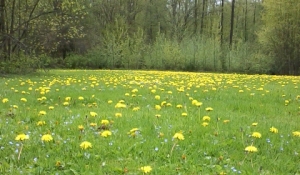
It was a beauteous day: the universe opened up above us with all its potential resplendence; nevertheless, none of the images I recorded for posterity documented anything much higher than my shoelaces. Below are a couple of examples: the top image was the highest extraterrestrial vector I managed…

.

.

dandelion_pilgrimage; dbjo_20140425

.

.

.

.fairy_princess_wedding_circle_2; dbjo_20140425

.

.

.

.

I was led to the images of Nordin Seruyan through hovercraftdoggy

.

.

.

.

.

.

Winter sunrise

 .

Walking through the

Forest; dark verdure,

Gnarled fingers working

Phthalo clay.

 .

I exhale, admiring the

Pearl-shrouded purity,

That frozen moment before

An in-drawn breath.

 .

High above me

A hawk rides the sunlight,

Splayed tail ablaze;

Luminous amber, rust-red.

hawthorne Lake.

I soar upward, yet sink inward…

 .

Back on earth, now,

I continue along my path

With a renewed appreciation

Of the unfathomable.

.

.

.

.

.

.

imagesCAA5MHCZThe vegetables at your local market or grocery store are still alive and can tell time.

A new study (Janet Braam in Current Biology), indicates that the way produce is stored has a significant effect on its nutritional value and health benefits. Fruits and vegetables, like animals, respond to circadian rhythms, and their biology is modified in response to different lighting conditions, a reaction that is programmed to defend against insects. These responses to lighting conditions affect the health value of the produce.  

For example, cruciferous vegetables (e.g.: cabbage), contain glucosinolates, which initiate the secretion of detoxifying enzymes that eliminate carcinogens from an organism (i.e.: cabbage fights cancer). The researchers put cabbage heads into light-dark circadian cycles and found that glucosinolate concentrations were almost twice as high during the day, reaching a peak in the hours just before dusk. The research indicates that it might be beneficial to store produce (at the market, or at home) in light-dark cycles, and consume the produce in daylight (and, preferably, just before dusk). It might also be best to harvest crops, freeze, and preserve them at the appropriate time.

I heard a rumour that the research was initiated because of a random remark by Janet Braam’s son. She was explaining to him that the food value in plants was known to change depending on the time of day. Her son mentioned that perhaps he should time his meals to coincide with the peaks of nutrition. Apparently, nobody had thought to check whether picked produce retained the circadian rhythm of the parent plant, hence the research. I also heard that Janet Braam wasn’t expecting the results that were found, and was pleasantly surprised. Sometimes it helps to think outside the box… 

.

.

.


Many years ago, when I was hiking through a forest alone, I happened upon an amphitheatre nestled in a natural bowl in the landscape. It was mere luck that guided my footsteps to the site…

The amphitheatre was ancient, centuries old. Its concentric stone benches had been worn to a velvet comfort by the gentle hands of time, and it was a euphoric experience to sit in quiet contemplation, absorbing the essences of ancient luminaries that had, I was sure, ruminated on the same seat.

An orb was cradled on a stone dais at the amphitheatre’s hub. The orb was approximately three meters in diameter, but its contours were only discernible as a subtle distortion of light. It was only at certain angles of perception that an elusive luminescence — a golden-green aura — was visible around its confines. I sensed rare perfumes seeping from the orb; exotic incenses from ethereal realms.

The orb also emitted a field; a palpable essence that rippled through the amphitheatre. The orb’s aura — the field — produced a sensation that is indescribable, indelible, and soothing, but I could advance no closer than a few meters from the orb, where a moderate, yet firm, resistance was felt (alike the force of magnetic opposition). The field was gentle, but its full power could be sensed. I endeavoured to break through the field — by anchoring my shoes in the soil and pressing enthusiastically with a shoulder — but I remained delightfully frustrated.

I sat quietly in the amphitheatre until twilight threatened and I was forced to retreat out of the forest. I removed my red tee-shirt, which I tore into strips to tie onto branches, to mark the way back.

The next day I retraced my steps, guided by the strips of cloth. A perplexing anxiety pervaded my being as I drew close to the site, as if I was about to lose something dear: but I pressed on, anticipation overcoming apprehension.

My heart sank when I entered the clearing.

There was no amphitheatre, no orb; instead, there was a dilapidated shack beside a pond that was fed by a meandering brook. Inside the shack there were signs of vagrants, rat droppings, and the poignant calling-card of skunk.

Had it been a dream, hallucination, or parallel world? There was no telling. Perhaps it was a unique experience, a gift to be appreciated, but let go, swept away with yesterday’s dust.

It had been a mistake, I decided, to try to return. I walked out of the forest, untying my rags from the trees as I went. A spiritual calm enveloped me.

I’ve never attempted to go back to the amphitheatre in the waking world, but I often visit in my dreams; and, when I do, I awake with new perspective; nothing tangible, but a feeling, an inner knowledge — a liberation— that guides me through the day.

.

.

.
footsteps1

.

.

.

.

.

.

.

.

.

.

The setting sun casts

Elongated shadows;

Luminous prints

Dapple the path.

Each indrawn breath; a lifetime,

Such a beautiful evening.

.

.

.

.

.

.

.

crescent-moonI have a delightful twenty-minute walk to work every day near the edge of a large university campus, beside a forested park. This morning’s was particularly revitalizing. It was cool, around the freezing point, and I could feel the pricks of winter’s final needles in my face, ears and fingers. My hair was slightly wet from my morning ablutions; I could feel the air attempting to freeze the ever-thinning follicles, and my moustache was damp from condensed nostril-exhaust.

All in all it was a lovely morning; I realized that all these sensations were signs that I was alive, vibrant.

Birds sang their morning arias, echoing within dark trees silhouetted against the morning sky.

The sky was surreal; sunrise was imminent. The eastern sky was a luminous indigo; overhead, deep cobalt. Several stars were visible, but they would soon vanish behind dawn’s blush.

The sun was reflected as a crescent moon, but the rest of the moon’s disk was barely darker than the firmament. The crescent hung dreamlike: I could almost detect the string that held it from above — it couldn’t possibly sit there, quiet and still, without spectral support from the heavens.

The morning walk set the tone for the day and my worries and insecurities vanished; like hallucinations, like phantasms born in a dream.

 .

May the path be flat before your weary feet.

.

.

.

The Olm (Order: Caudata, Family: Proteidae)

olm

Photo: EDGE of Existence
(http://www.edgeofexistence.org)

The olm are cave dwelling, aquatic vertebrates that have descended from an ancient branch of salamanders: they have evolved independently for one-hundred-and-ninety million years (since the early Jurassic period, in the era of the dinosaurs), but they are now a threatened species due to pollution and loss of habitat.

The olm prefer underground water systems that are calm, well-oxygenated, and maintain a constant, year-round temperature  of 6-12°C. The creatures have found a niche in the underground caves of the Dinaric Alps in north-eastern Italy and Boznia and Herzegovina. They are social animals, and populations have been discovered close to ground-level and as deep as three-hundred meters beneath the surface.

Olm do not metamorphose like most other salamanders; they maintain their larval characteristics throughout their aquatic existence: their eyelids never grow in, and they retain feathery gills and a tail fin.  They are pale creatures with skin-covered eyes; they cannot see objects, but their eyes are light sensitive. They hunt in pitch-darkness, using enhanced senses of smell, taste, hearing, and an additional faculty of electrosensitivity (recently, it has been suggested that the olm may also use the Earth’s magnetic field for orientation).

Olm are capable of consuming excessive quantities of nutrients for storage as fats and sugars in their liver; and, when food is in short supply, they can reduce their metabolism.  If sustenance is unavailable for a prolonged period, they are able to reabsorb their own tissues. They can live for ten years without food.

.

.

.

The first big snowfall of the season came a couple of days before the winter solstice; but, for me, the snow marked the beginning of the Christmas/Winter season. I’m off work now until the end of the year, but two days ago I was wishing my holidays started slightly earlier: it took me three hours to get home, and that was after a half-hour spent digging my car out of the snow bank created by a plough. After a snow dump of 15 cm, it rained, which caused very icy conditions, especially in heavy-traffic areas.

I must admit, a snow-ladened landscape is incredibly stunning, but it’s so much easier to appreciate while at home, sitting on the sofa, warm and comfortable by the fire.

snow_furniture

.

.

.

.

.

The Dumbo Octopus (genus Grimotheuthis) — named after the famed Disney elephant — has ear-like fins that are used for propulsion through the water. They also use water-jet propulsion and swim with a rhythmic thrust of their arms, like other octopods, but flapping their ear-fins seems to be a favoured form of propulsion.

Not a lot is known about this rarest of the Octopoda species. They have been found as shallow as 400 meters below the surface, but are most commonly found at depths of 3,000 to 4,000 meters. One species was discovered at a depth of seven thousand meters, deeper than any other known octopus. They hover above the ocean floor and feed on worms, molluscs and crustaceans; but, unlike other octopods, they swallow prey whole because they have no radula (a tongue with teeth on it).

The male has an adapted section on one arm that is probably used to convey spermatosphores into the female.

I wonder how many unknown, strange creatures lurk in the dark depths…

.

.

.