Perhaps it was because this is the first day of a long weekend (Canadian Thanksgiving), perhaps it was due to the lovely autumn day with multi-coloured plumage bathing in luminous sunlight, or perhaps it was  Cannonball Adderley’s Autumn Leaves (Miles’ solo, just under a minute in, is when the magic begins). Whatever the preamblulatory reasons were, when  the quote below popped into my email (courtesy of Tricycle Daily Dharma), and I read it, I was inspired to adopt a wondrous mood.

Amber Buddha; dbj, 2012“As adults, we need to become newly aware of the love that has infused our lives all along, to turn our attention to it afresh with the eyes of a child. To do so is to become conscious of the tremendous capacity for love that even now permeates our being — to open to it, to be healed by its life-giving energy, and to participate in its power to renew our world. We can awaken to the deepest goodness in ourselves and others. We can learn to recognize and commune with the blessings that have always been pouring forth.”

from  John Makransky’s article, Love Is All Around

.

.

.

.

.

.

“Enlightened Society is not an idealized environment.

“It is an environment that actually accepts the imperfections of humanity and encourages you to open your heart and mind and work with other people and situations as they are.

Enlightened society is one in which, as you make friends with yourself, your communication with other people gets clearer, more direct, more honest.”

Pema Chödrön, No Place to Hide

.

.

.

.

.

.

“If there’s one lesson that runs through pretty much every Buddhist tradition, it’s this: there are no magic solutions. Our belief in magic solutions that may happen some day in the future keeps us from doing what we really need to do right here and right now.”

from a Tricycle article, “A Minty Fresh Mind” by Brad Warner

“As you walk, cultivate a sense of ease. There’s no hurry to get anywhere, no destination to reach. You’re just walking. This is a good instruction: just walk. As you walk, as you let go of the desire to get somewhere, you begin to sense the joy in simply walking, in being in the present moment. You begin to comprehend the preciousness of each step. It’s an extraordinarily precious experience to walk on this earth.”

Peter Doobinin, from a Tricycle article, Step by Step

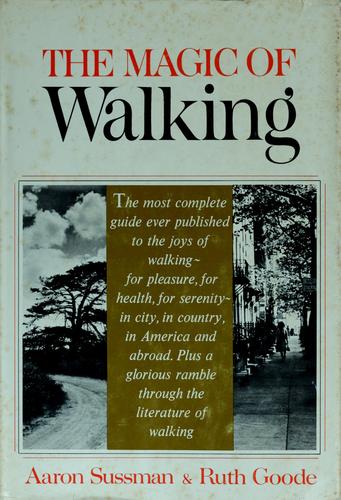
The quote above reminded me of a book I know I have, but couldn’t find (I nearly tore my bookshelves apart looking for it: I’m hoping it’s in a box in the storage room): the book is The Magic of Walking (by Aaron Sussman and Ruth Goode), which contains some excellent writings on walking by luminaries such as Ralph Waldo Emerson, Henry David Thoreau, Vladimir Nabokov, Thomas Mann, Lin Yutang, and others.

As well as literate writings, the book delves into the psychology, science, and art of walking.

I believe the book is out of print, but if you ever see a copy I highly recommend giving it a try.

“The mind and the world are opposites, and vision arises where they meet. When your mind doesn’t stir inside, the world doesn’t arise outside. When the world and the mind are both transparent, this is true vision. And such understanding is true understanding.”

Excerpted from The Zen Teaching of Bodhidharma, copyright © 1987 by Red Pine. Published by North Point Press. [the entire article is on tricycle’s website]

The quote below (found at Tricycle Daily Dharma, Oct. 29) is from an article by Cynthia Thatcher (What’s So Great About Now?):

“The current myth among some meditation circles is that the more mindful we are, the more beauty we’ll perceive in mundane objects. To the mind with bare attention, even the suds in the dishpan—as their bubbles glint and wink in the light—are windows on a divine radiance. That’s the myth. But the truth is almost the opposite: in fact, the more mindfulness we have, the less compelling sense-objects seem, until at last we lose all desire for them. It’s true that strong concentration can seem to intensify colors, sounds, and so forth. But concentration alone doesn’t lead to insight or awakening. To say that mindfulness makes the winter sky more sublime, or the act of doing the dishes an exercise in wonder, chafes against the First Noble Truth.”

the entire article